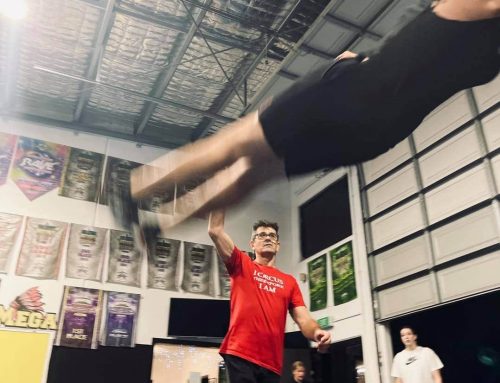
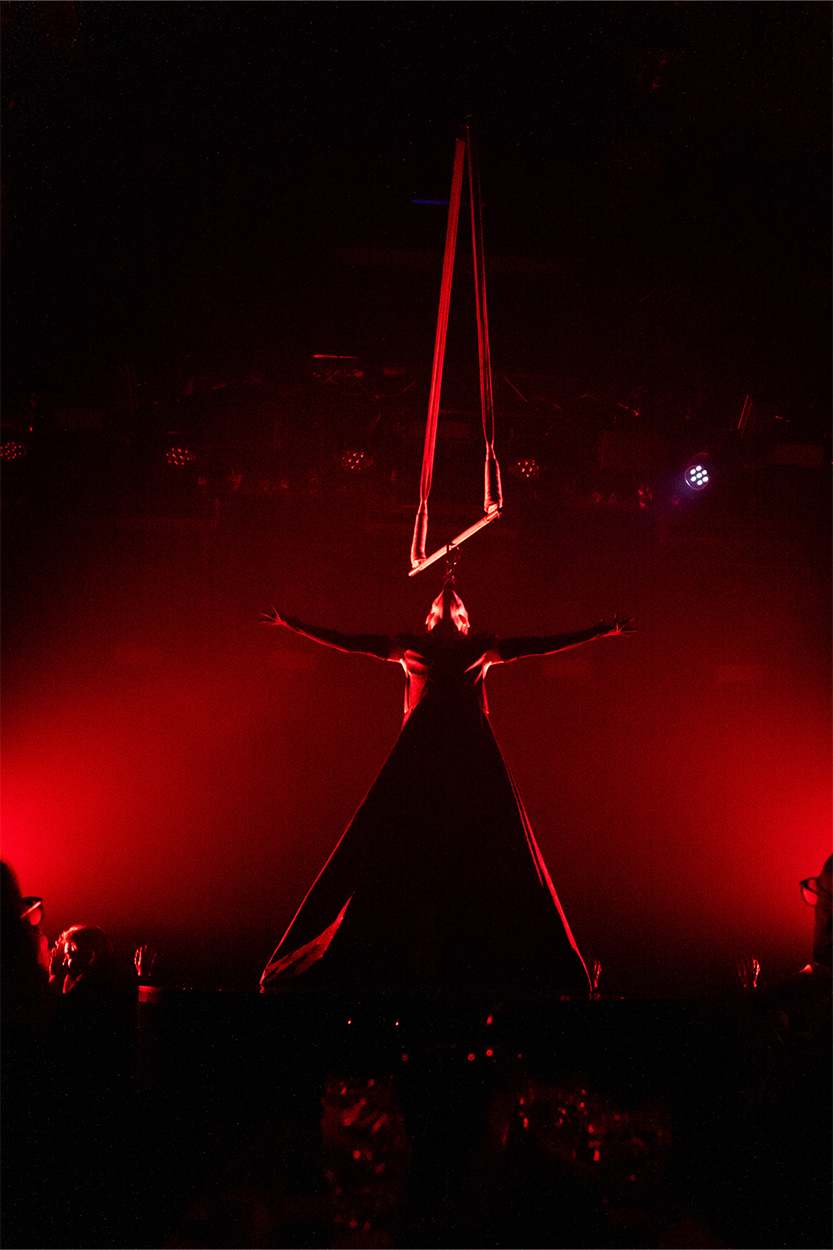
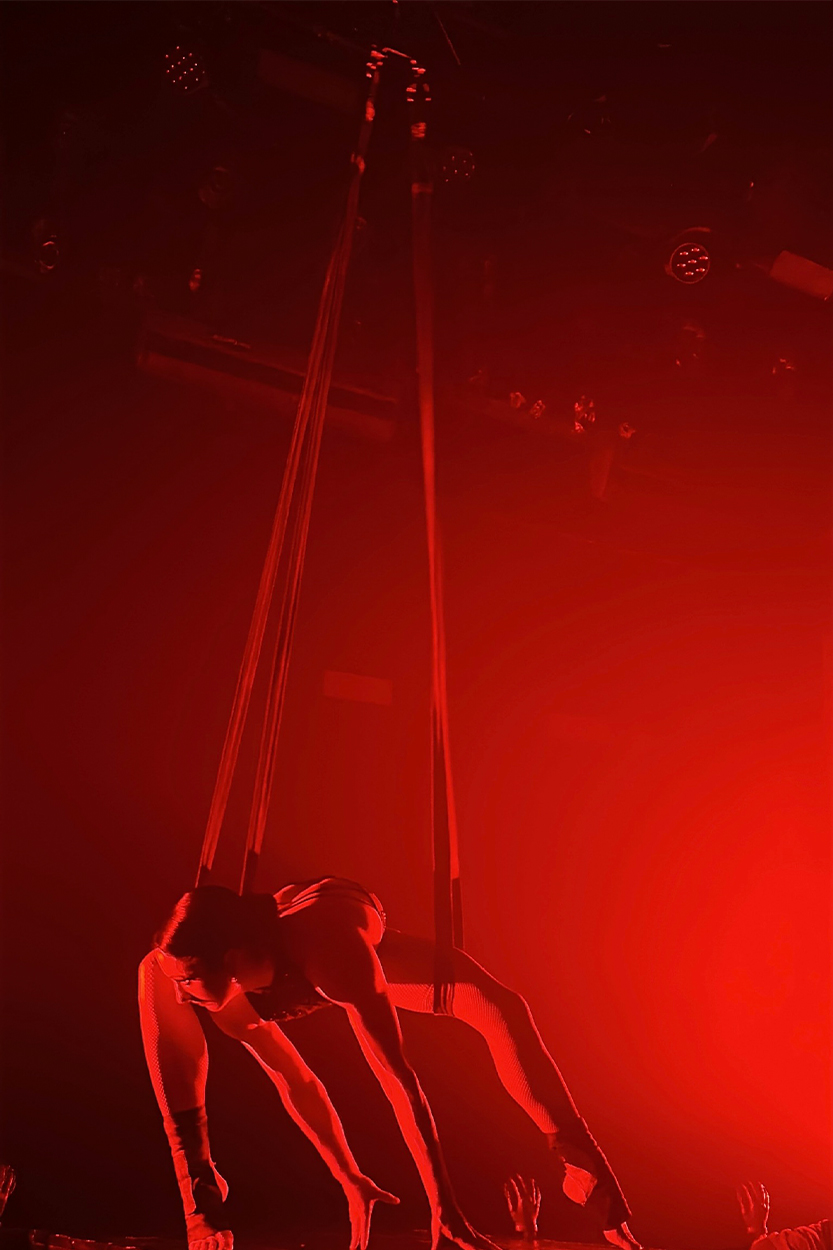
Pictured: @notjustandy & @amber.aeriallina at Draculas Cabaret on the Gold Coast.
Winch and rigging by Theatre Safe Australia. Circus equipment by Trix Circus.
Winch and rigging by Theatre Safe Australia. Circus equipment by Trix Circus.
As manufacturers of circus equipment, we often get asked about winches for human loading. Although we own a winch that we use in our training studio, we are not winch experts; so we prefer to direct our clients to specialists like Theatre Safe Australia (TSA) for expert clarification on which winches are suitable for human loading.
Winches suitable for circus use/human loading are very expensive and rarely within the budget for one-off aerial gigs. Because of this, aerialists and event coordinators often ask us about using chain hoists for circus performances. Chain hoists are less expensive and far more commonly available than specialised winches manufactured for human loading. Our response to this question is very simple: chain hoists are designed for materials handling, not human loading. To use a chain hoist for human loading would be outside manufacturer’s specifications and therefore a hazardous deviation from the intended use of a chain hoist. Standard chain hoists comply with material handling standards, these do not generally include the redundant safety factors required for human loads.
Standard entertainment chain hoists are designed and certified for lifting suspended loads, not for lifting or supporting people. Even though many chain hoists now incorporate many of the commonly accepted safety features for human loading (as listed below); those features alone do not make them suitable for human suspension.
- limiter switches
- overloading protection
- a double breaking system
- a grooved drum
- appropriate design factors
- appropriate working load limits
- a manual release for emergencies.
Once a live human load is involved, the requirements change significantly. Human suspension equipment is typically designed to higher standards and incorporates additional layers of redundancy, fail-safe design and risk management that simply aren’t present in a conventional chain hoist. Not to forget the hazard of the chain itself. During use, the chain commonly feeds into and out of a bag above the hook point; this bag has the potential to lose its load directly onto any aerialist who is rigged from that hoist.
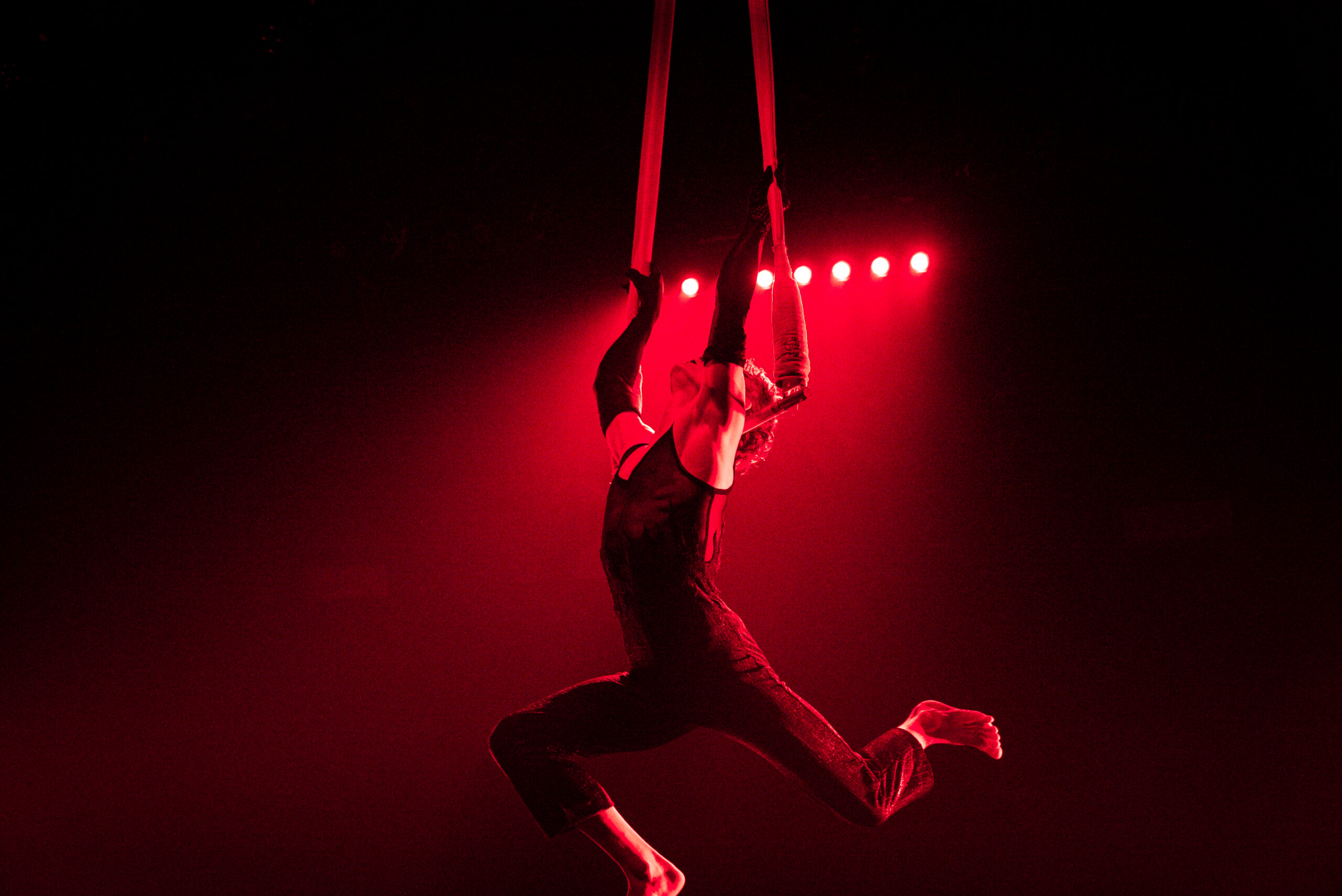
As with all rigging, there are sometimes grey areas in the decision-making process. These must be handled with consistent risk mitigation, consultation with other personnel and an educated decision making across stakeholders. For instance, there may be an event/location-based reason to use a chain hoist as a static positioner for an aerial artist or act. Once positioned to the correct height, the hoist would need to be isolated from further operation during the event or presentation. The slack chain must also be secured within the chain bag so it cannot feed out or fall onto the performer. The performer must do a technical rehearsal so that they are aware of the weight of the hoist above them and can adjust their routine to safely work around this hazard. In this way, the system effectively becomes a static suspension point rather than an active lifting device. It would not be used or operated during a show at all.
Even this example isn’t a generic approach; it would require careful consideration and consultation. The decision would be assessed based on the specific application, documented engineering methodology, detailed risk assessments, rescue planning, and backed by training, documentation and agreed upon operating procedures for the task being undertaken.
As with so many of the hard and expensive rigging questions, it returns to the concept we learn in our rigging courses; refer to the manufacturer’s specifications and consider the intended use of the equipment. If something goes wrong, it could be catastrophic, costing you your livelihood and another person their life. Again we recommend contacting specialised companies like Theatre Safe Australia for your human flight/circus winch needs.