Our Trix team is well versed with a high level circus school from personal experience. Rodleigh, Amanda and Stephanie all completed professional coaching qualifications at Ecole National de Cirque (ENC) in Montreal and coached there following their graduation. If you are already training in a circus studio and trying to decide to make circus performing your career, you might want to consider training at a qualified high level circus school. Factors like where you live or where you want to work in the future will influence which circus school you apply to. Not all circus schools are the same, so to help you make that decision, follow this link to many of the best in the world who could help you turn into the circus star you believe you can become: FEDEC. If you want a guarantee that you will become employed once you have completed your training, check with the school/s of your choice what the percentage of students obtaining circus employment after graduating from their institute.
If you have decided to further your education and enroll in any of the circus schools suggested from the FEDEC website, this blog will outline what you can expect to experience at your new circus school. This is based on our years of experience at ENC. New enrollees will be given a very full daily schedule covering a wide variety of supervised physical lessons designed to make you stronger, more mobile and increase your dramatic abilities. These processes will give students a much better chance to excel in their circus disciplines. Creating an all-round performer requires cross training, so a typical day at the school includes:-
- Cardio vascular training – usually running or cycling.
- Dance – to learn to keep movements in time with music.
- Theatre studies – learning character development and how to be on a stage.
- Flexibility – to help avoid injury and make beautiful physical lines.
- Hand balancing – for good posture and body tension (muscle control).
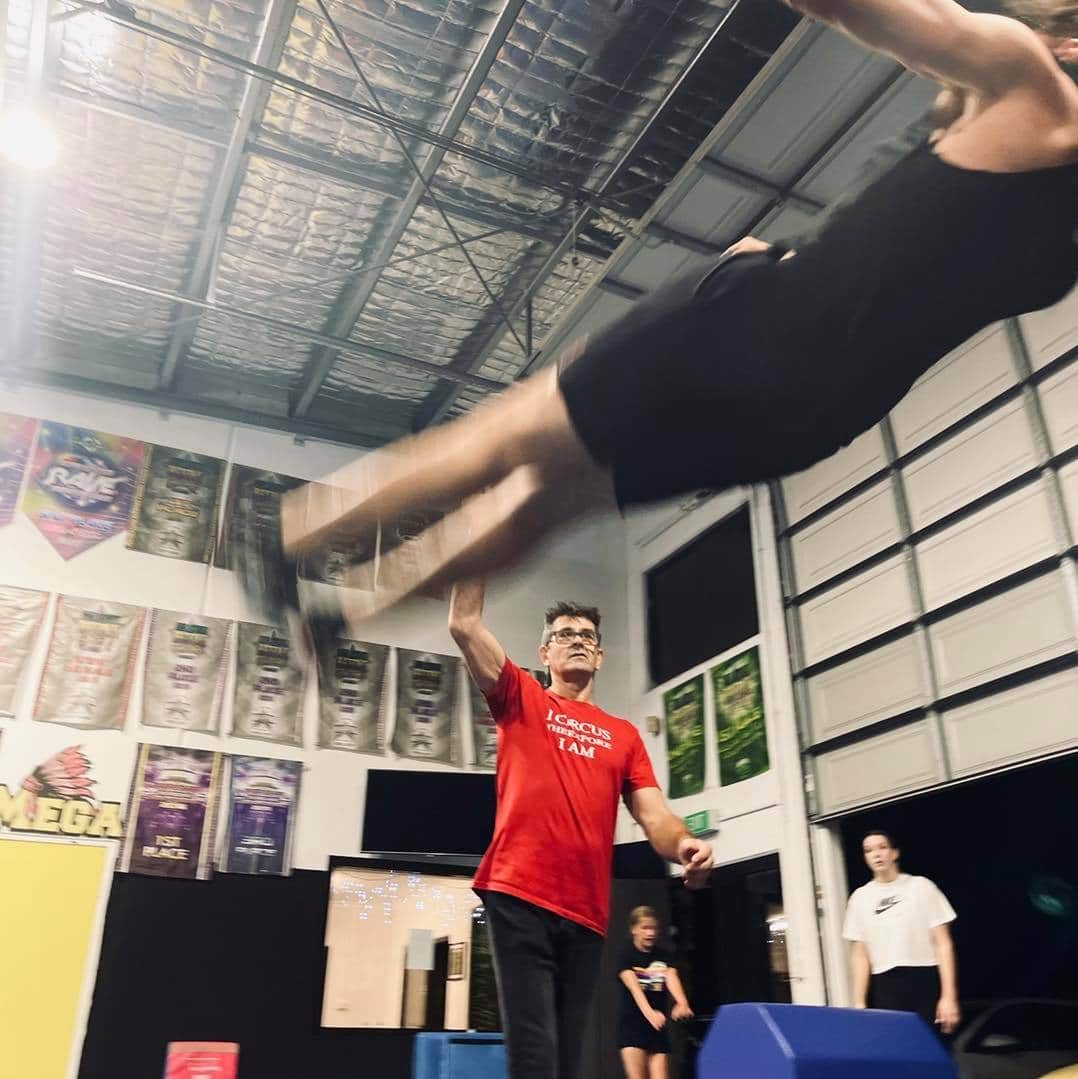
- Ground acrobatics and trampoline – to learn body awareness in the air.
- Weight training – to get specified strength for your chosen discipline.
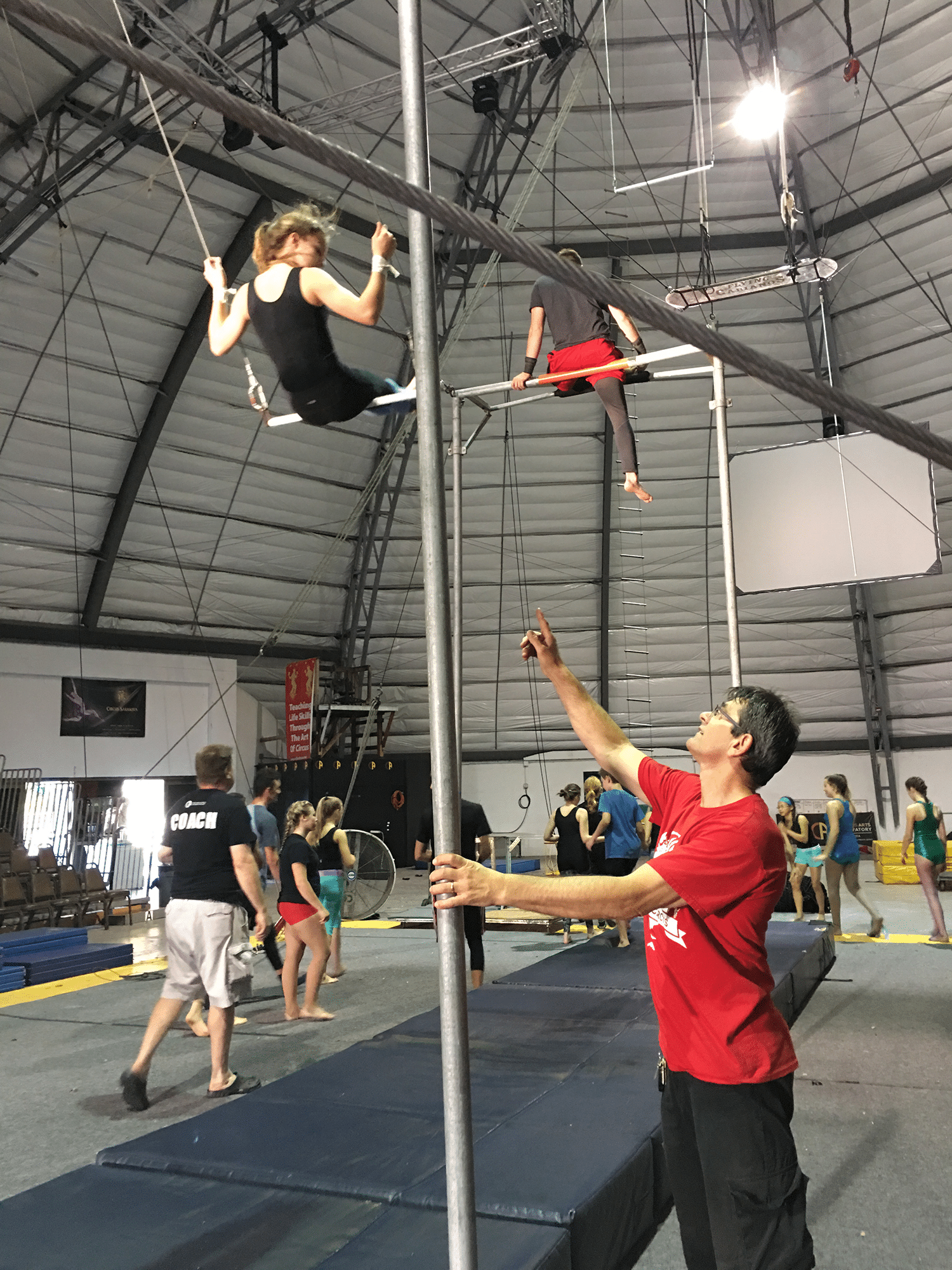
- One-on-one coaching – with a specialised highly skilled coach who trains you in the two disciplines of your choice.
Students in their first year generally train for 8 hours every day, 5 days a week. Sometimes they will have a free lesson during which time they are encouraged to go to the school library where they have access to a very large variety of circus books and videos. They can watch shows from previous third year students, or see the variety of unusual acts that have been performed from circus companies all over the world. This can help them plan their personal development, or give them more ambitions about what they would like to achieve. They might need to join a class offering partner work, making themselves available to a partner in one of the partner disciplines offered. Students will see the graduating show of the third year students and see the skill level that they are expected to achieve by the time they reach the end of their third year. If you study in a country with a different language to your home language, you will need to achieve a minimum level of communication in that language. Schools will have teachers for this purpose.
By the time the students are in their second year, they will have chosen their major and secondary disciplines. They will only focus on those two disciplines; any of the supporting classes required to help them succeed and excel in these chosen disciplines. This will free up some lessons since doing a class in flexibility might not be required for someone wanting to juggle or become a tight wire artist. Sometimes they will need to endure a double lesson in their major discipline with their specialised coach. These lessons are very intense. They are trained hard in order to learn all basic skills that are the foundation skills for the advanced skills that they will be expected to learn before the end of their third year. If you chose to be a partner in a duo or trio discipline, you will invest a lot of time training with different partners until you all decide on committing to each other. The act that you develop must be shown at your graduation with the same partner/s.
Students in their third year have sessions with an artistic director who helps them create a performance piece for their graduation at the end of the third year. They also do short courses in business management; teaching them how to negotiate contracts with future employers. They will learn how to create show reels and do character training which they may need when applying for future contracts. The school’s rigging team will train them on how to set up their equipment if their discipline requires it. They will learn what safe rigging looks like and how to tell the difference so that they can take some control of their safety after they matriculate.
Almost all students will face mental challenges like self doubt, confusion or frustration if they’re unable to achieve difficult skills. Schools will offer access to trained sports psychologists who can help guide them through those difficult times. Schools will also offer training in nutrition from qualified nutritionists and dietitians. At the end of each school year, you will be required to perform your speciality and secondary disciplines in front of a group of judges made up of the head of the school, coaches and often a representative of a well known circus company. Final year students will create a group spectacle; this is guided by artistic directors and gives the students a chance to do their speciality act in the context of a full production. In Montreal this production is performed at the TOHU theatre, over the road from ENC.
Trix Circus can help you with all your specialised circus equipment requirements when you are ready to take on contracts. Most places of employment will require that your equipment has a tag on it or information about who manufactured it and what the breaking strain is. Many production companies will not allow you to use your own equipment if it fails to satisfy this requirement. Trix Circus has supplied circus equipment to all the major circus companies, cruise lines and touring productions, both locally and globally. Riggers and technicians love our gear because it is clearly marked, certified and made to exacting standards.
Hopefully this is food for thought and helps you with the choices in front of you; whether it is deciding which circus school to attend, what discipline you want to excel in or what future contracts you dream of achieving. Good luck and train safely!